After months of waiting for the dvds to become available, I finally decided to bite the cookie and buy the Gingerdead Man trilogy:

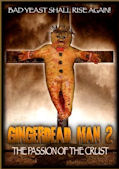

Netflix is the devil.
Dark-eyed daughter of the sun…
After months of waiting for the dvds to become available, I finally decided to bite the cookie and buy the Gingerdead Man trilogy:
Netflix is the devil.
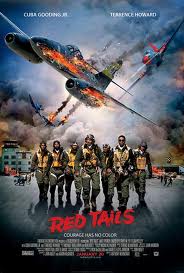
After years of trying to get Red Tails, his movie about the Tuskegee Airmen made, George Lucas plunked down his own money for the project. It will be in theaters Jan 20th.
To learn more about the movie and Lucas’ struggles to bring it to the big screen, check out this article from USA Today: George Lucas’ ‘Red Tails’ salutes Tuskegee Airmen
What’s weird, to me, is Lucas’ idea of how Red Tails might affect black filmmakers. The excerpt below comes from a sidebar where Lucas’ talks about filmmaking.
“I realize that by accident I’ve now put the black film community at risk (with Red Tails, whose $58 million budget far exceeds typical all-black productions). I’m saying, if this doesn’t work, there’s a good chance you’ll stay where you are for quite a while. It’ll be harder for you guys to break out of that (lower-budget) mold. But if I can break through with this movie, then hopefully there will be someone else out there saying let’s make a prequel and sequel, and soon you have more Tyler Perrys out there.”
I think Lucas has it partially right. If Red Tails fails at the box office, film executives will point to it as a reason not to greenlight other big budget dramatic/action-adventure movies featuring an all black cast (without Will Smith). However, if Red Tails is successful, I don’t think it will really open the door for the black film community. It would open the door for Lucas’ to do a big budget sequel.
But what do I know? Maybe there’s a black filmmaker prayer circle devoted to lifting up Red Tails to the almighty.
I’m not even going to touch that part about more Tyler Perrys…
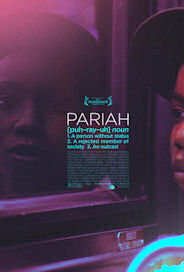
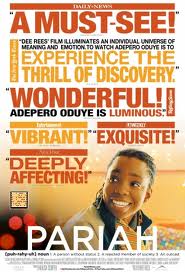
Pariah is about Alike, a seventeen year old African American lesbian trying to navigate her way in the world.
Alike gets dressed for school in mother-approved wardrobe. Once at school, she ducks quickly into the bathroom and changes into a more tomboyish outfit. Still, her parents suspect. Her father is more than happy to ignore it. Her mother’s response is to force Alike to spend time with a wholesome, church going girl instead of her ‘out’ best friend, Laura.
Laura also serves as Alike’s guide to a very limited slice of Afr-Am lesbian life–the club scene, the hang out spots, the hunt for her first girlfriend. Alike doesn’t feel 100% at home here either.
Alike needs to find a way to be herself because being what other people want/expect isn’t working…
The Good
*I definitely saw elements of my own coming out/venturing into the black lesbian world in Alike’s story. For a few minutes, I had flashbacks to catching the bus home after seeing dancers at Club Bunns.
*Since it’s Alike’s story, you expect her to be a fully fleshed out character–and she was. The pleasant surprise for me was that none of the main players were flat stereotype/stock characters. For example, Audrey (the mother) could have easily been a caricature but Kim Wayans portrays her as a woman who has been bitter/unhappy for a number of years. Alike’s sexuality is an issue that she can focus on to avoid her other problems.
The Great
-Seeing characters that I can identify with on the big screen.
The Bad
(insert sound of crickets chirping here)
Bottom Line: Great movie. Go see it.
 Tawanna Sullivan